
ผลงานวิจัย
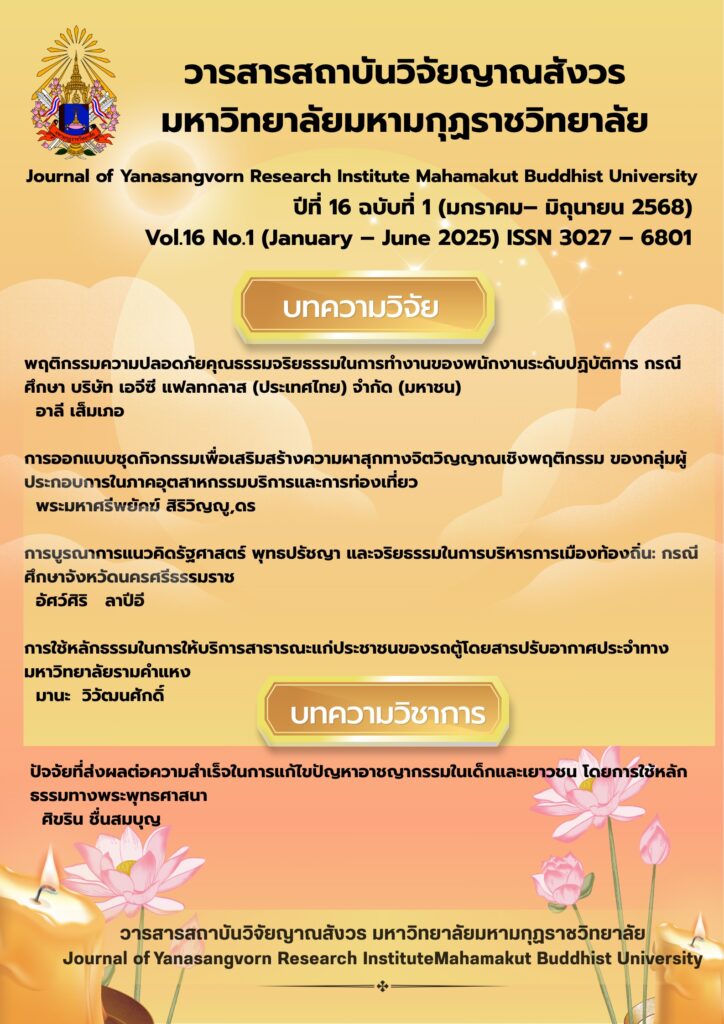
FACTORS AFFECTING THE SUCCESS OF SOLVING CRIME PROBLEMS IN CHILDREN AND YOUTH BY USING BUDDHIST PRINCIPLES
(Sikarin Chuensomboon)
This article aims to examine the factors influencing the success of addressing juvenile delinquency through the application of Buddhist principles. The study involves a review of research literature and academic articles related to Buddhist academic teachings that are relevant to solving juvenile crime problems. The objective is to analyze the root causes of the issue and synthesize concrete solutions, culminating in the development of a conceptual model for problem-solving.The findings indicate that the key factors contributing to the successful application of Buddhist principles in addressing juvenile delinquency can be categorized into the following model.1.Individual-Level Factors (Buddhist Perspective) : These refer to personal attributes related to belief, faith, and adherence to Buddhist teachings. 2. Family-Level Factors : These involve influences stemming from the family environment and behaviors of family members that impact the correction of juvenile crime. 3. Social and Community-Level Factors: These include the socio-cultural environment and the role of communities and religious organizations in fostering, encouraging, and supporting children and youth to follow Buddhist moral teachings. 4. Justice System-Level Factors: These refer to the integration of Buddhist principles into the justice process to promote fairness and peace. 5. Other Factors : These encompass influences that do not fall under the individual, family, social, or community categories.
Read More : https://so04.tci-thaijo.org/index.php/yri/article/view/281650/188681

MORAL LEADERSHIP OF PROPERTY MANAGEMENT EXCUTIVE
(Sikarin Chuensomboon)
The Research “Moral Leadership of Property Management Executives” is primarily quantitative research and qualitative research is complementary. The purpose of the study is to study the current management situation about leadership and to create a leadership model for property managers. By studying and analyzing demographic data or personal factors of the respondents, and collecting data from a sample of 400 property managers of housing estates and condominiums in Bangkok and surrounding area to provide information about the current state of ethical leadership of property managers. Then create a model of ethical leadership of property managers, check the accuracy and appropriateness of the model, and conduct qualitative checks to find the suitability and feasibility of the model of ethical leadership of property managers by in-depth interviews (In-depth Interview) of experts to check the accuracy of the content of the opinion questionnaire and the expert interview form.
The results of the research found that “Moral Leadership of Property Management Executives” should have 4 ethical qualities that property managers must have:
1. GOOD ROLE MODEL: Being a good role model in ethical work
2. TRANSPARENCY: Being transparent in work
3. STAKEHOLDER ENGAGAMENT: Working equally
4. COMMUNICATION SKILL: Having skills, knowledge and communication ability
Read more : https://so04.tci-thaijo.org/index.php/yri/article/view/269616
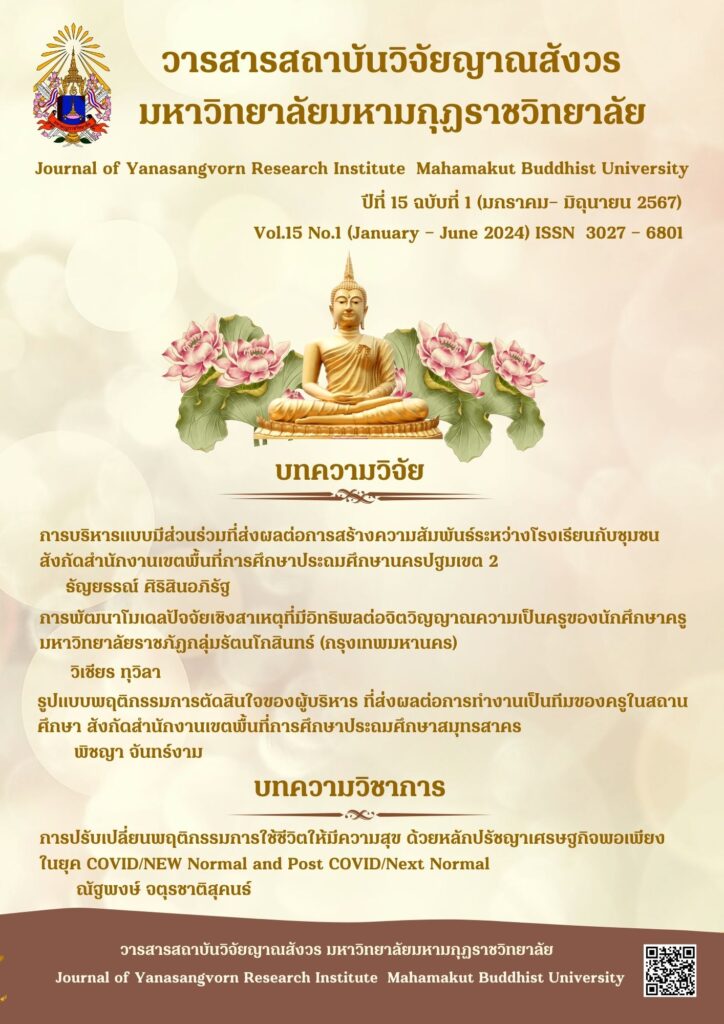
FACTORS THAT PROMOTE EFFICIENCY IN THE MANAGEMENT OF CONDOMINIUM AND HOUSING JURISTIC PERSONS
(Sikarin Chuensomboon)
This academic article had the objective to study the factors affecting efficiency in the management of condominium and housing development juristic persons by research gather data from research academic articles to create a model about factors affecting efficiency in the management of condominium and housing development juristic persons which can be divided into main types: 1. Good Management means planning, organizing, and implementing plans and effective control to ensure compliance with the plan 2. Personnel Quality means the juristic person committee and juristic person officers should have good knowledge, ability, and experience in working in juristic person management 3. Adequate Resources (Resources) means that a juristic person should have a sufficient budget for operations, assets and equipment necessary for operations 4. Relevant laws and Regulations means relevant laws and regulations should be clear and consistent with the reality and facilitate the operations of the juristic person 5. Participation of Members means members should participate in determining policies and operational plans of the juristic 6. External Environment refers to the external environment such as economic, social and political conditions that may affect the operations of the juristic person.
Read more : https://so04.tci-thaijo.org/index.php/yri/article/view/273464/184386